

This Lemon Bundt Cake is soft, moist, and bursting with fresh lemon flavor in every bite. Topped with a sweet and tangy lemon glaze, it’s the perfect dessert for spring gatherings, brunch, or anytime you’re craving a bright citrus treat. Simple to make and beautifully elegant, this easy lemon cake delivers bakery-style results right from your kitchen
Why This Is the Best Lemon Bundt Cake
- Bright, Fresh Lemon Flavor – Made with real lemon juice and zest for a bold citrus taste.
- Incredibly Moist & Soft – Tender crumb that stays soft for days (no dry cake here!).
- Easy From-Scratch Recipe – Simple ingredients, beginner-friendly steps, bakery-style results.
- Perfect for Any Occasion – Ideal for spring desserts, Easter brunch, baby showers, or afternoon tea.
- Elegant Yet Effortless – The bundt shape makes it look impressive with minimal effort.
- Sweet & Tangy Lemon Glaze – The glossy drizzle takes the flavor to the next level.
- Make-Ahead Friendly – Tastes even better the next day as the lemon flavor deepens.
If you love lemony desserts, you must try these recipes Lemon Blueberry Muffins, Lemon Blueberry Bread, Lemon Crinkle Cookies, Lemon Pineapple Dump Cake, Lemon Dump Cake, Lemon Cake Mix Cookies
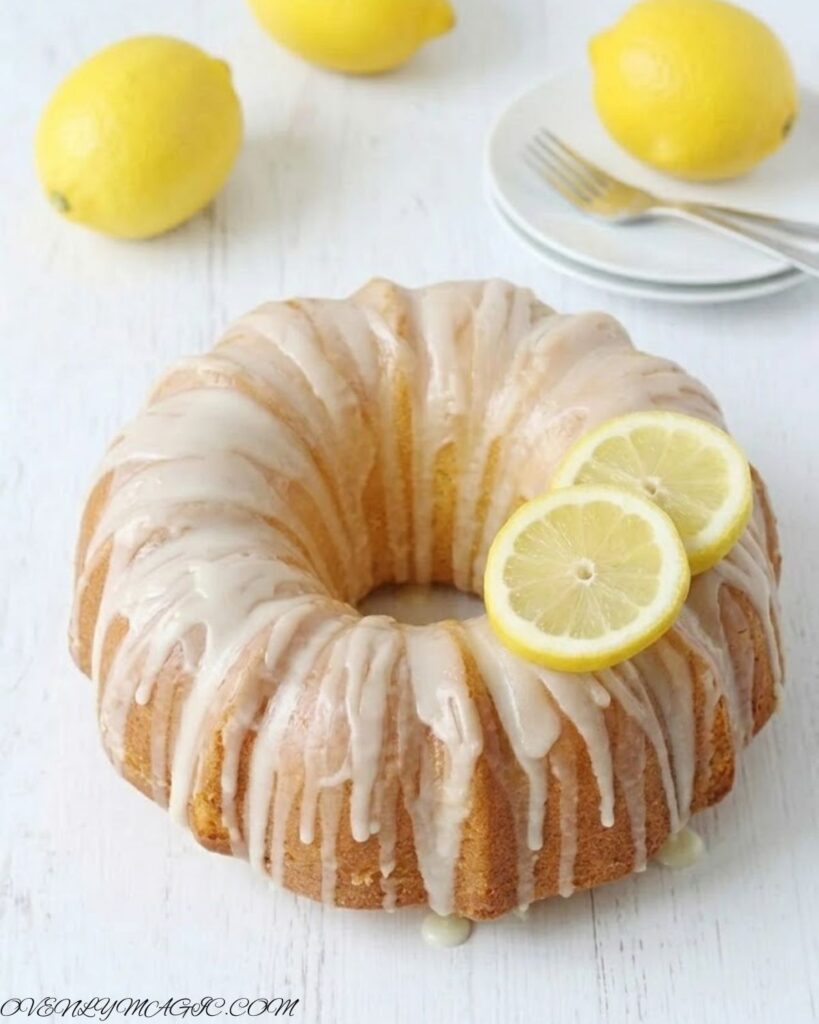
Ingredients for Moist Lemon Bundt Cake
For the Lemon Bundt Cake
- 3 cups all-purpose flour – Provides structure and a tender crumb.
- 1 teaspoon baking powder – Helps the cake rise evenly.
- ½ teaspoon baking soda – Works with acidic ingredients for lift and softness.
- ½ teaspoon salt – Balances sweetness and enhances flavor.
- 1 cup unsalted butter (2 sticks), room temperature – Creates a rich, moist, buttery texture.
- 2 cups granulated sugar – Sweetens the cake and helps create a soft crumb.
- 1 tablespoon fresh lemon zest (from 1 lemon) – Adds bold, natural citrus flavor.
- 4 large eggs – Provide structure, richness, and stability.
- ½ teaspoon vanilla extract – Enhances overall flavor depth.
- ½ cup milk (any type except non-fat) – Adds moisture and softness.
- ½ cup full-fat sour cream – Ensures a moist, tender cake texture.
- 1 tablespoon fresh lemon juice – Boosts fresh lemon flavor and balances sweetness.
For the Lemon Glaze
- 2 tablespoons butter, melted – Adds richness and smooth texture to the glaze.
- 1 cup powdered sugar – Creates the sweet base for the glaze.
- 1 tablespoon fresh lemon juice – Gives the glaze a bright, tangy finish.
How to Make Lemon Bundt Cake (Step-by-Step Guide)
Step 1: Preheat & Prepare the Bundt Pan
First, preheat your oven to 325°F (163°C). Now, generously grease and flour your bundt pan. Don’t rush this step, bundt cakes love to stick! Make sure you coat every curve and corner so the cake releases beautifully later.
Step 2: Mix the Dry Ingredients
In a medium bowl, whisk together the flour, baking powder, baking soda, and salt until well combined. This step helps evenly distribute the leavening agents throughout the flour, ensuring your Lemon Bundt Cake rises properly and bakes with a soft, even texture. Once mixed, set the bowl aside while you prepare the wet ingredients.
Step 3: Cream the Butter & Sugar
In a large mixing bowl, beat the room-temperature butter until completely smooth and creamy. Add the sugar and beat on medium speed for 1–2 minutes until light and fluffy. This step creates air in the batter, giving you a soft, tender cake texture.
Step 4: Add Lemon Zest & Eggs
Mix in the fresh lemon zest for that bright citrus aroma. Now add the eggs one at a time, mixing for a few seconds between each addition. This helps everything blend smoothly without curdling.
Step 5: Add Milk & Dry Ingredients
While mixing on low speed:
- Add half of the flour mixture
- Pour in the milk and vanilla
- Add the remaining flour mixture
Mix gently just until combined. Overmixing can make the cake dense.
Step 6: Add Sour Cream & Lemon Juice
Now add the sour cream and fresh lemon juice. Blend just until everything is incorporated. The sour cream is what makes this lemon bundt cake incredibly moist and soft.
Step 7: Fill the Pan & Bake
Pour the batter into your prepared bundt pan. Use a spatula to smooth the top evenly. Bake for 60–70 minutes, or until a toothpick inserted into the center comes out clean or with a few moist crumbs (but no wet batter).
Step 8: Cool & Release the Cake
Let the cake cool in the pan on a wire rack for about 1 hour, until the pan feels just slightly warm. Gently loosen the edges with a small spatula. Place a serving plate on top, flip it over, give the bottom a firm tap, and lift the pan off carefully. Perfect release every time!
Prepare the Lemon Glaze
Make the Glaze
In a medium bowl:
- Melt the butter
- Whisk in powdered sugar
- Add fresh lemon juice
Keep whisking until smooth. The glaze will thicken as it sits, so adjust the thickness before pouring.
Step 10: Glaze & Serve
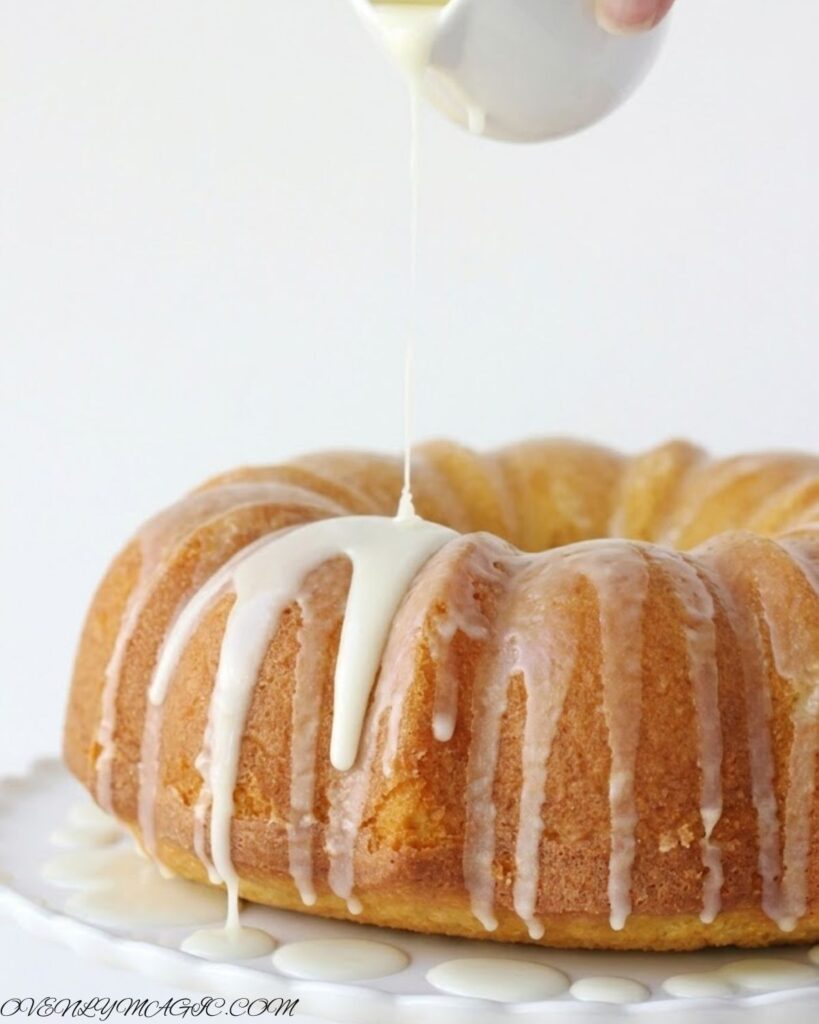
Drizzle the glaze over the cooled cake. Let it set slightly before slicing. Now step back and admire your beautiful, bakery-style Lemon Bundt Cake.
Expert Tips for a Perfect Lemon Bundt Cake
Use Fresh Lemon Juice & Zest
Always use freshly squeezed lemon juice and real lemon zest. Bottled juice won’t give you the same bright, natural citrus flavor. The zest is where most of the lemon aroma lives, so don’t skip it!
Make Sure Butter Is Room Temperature
Soft (not melted) butter creams properly with sugar, creating air pockets that give your cake a light and tender crumb. Cold butter won’t blend well, and melted butter can make the cake dense.
Don’t Overmix the Batter
Once you add the flour mixture, mix just until combined. Overmixing develops gluten, which can lead to a tough or dense bundt cake instead of a soft, moist texture.
Use Full-Fat Sour Cream
Full-fat sour cream adds richness and keeps the cake incredibly moist. It also balances the sweetness and enhances the lemon flavor beautifully.
Check Your Oven Temperature
Bundt cakes bake longer than regular cakes. Use an oven thermometer if possible to ensure your oven is truly at 325°F. Incorrect temperature is a common cause of dry cakes.
Grease the Bundt Pan Thoroughly
Be generous when greasing and flouring the pan, especially around the center tube and detailed edges. This prevents sticking and ensures a clean, beautiful release.
Let the Cake Cool Properly
Allow the cake to cool in the pan for about an hour before flipping. Removing it too soon can cause breaking; waiting too long can cause sticking.
Adjust the Glaze Consistency
If the glaze is too thick, add a few drops of lemon juice. If too thin, add a little powdered sugar. You want it thick enough to coat but thin enough to drizzle smoothly.

Common Mistakes That Make Bundt Cakes Dry
One of the biggest reasons a bundt cake comes out dry or heavy is overmixing the batter. Once you add the flour, folding too much develops gluten, which can make the cake tough instead of soft and tender.
Another common mistake is using cold ingredients. Butter, eggs, and milk straight from the fridge don’t incorporate evenly, which can lead to uneven texture and dense spots. Always bring your ingredients to room temperature.
Incorrect oven temperature is another culprit. If the oven is too hot, the cake bakes too fast on the outside and dries out; too low, and the cake can sink or stay dense. Using an oven thermometer ensures accurate baking.
Not greasing the bundt pan properly is also an issue. Bundt cakes have curves and edges that can stick if under-greased, making the cake tear when you remove it.
Finally, overbaking is a classic mistake. Bundt cakes need time to cook through, but even a few extra minutes can dry them out. Check for doneness by inserting a toothpick it should come out clean or with a few moist crumbs, never wet batter.
Variations: Lemon Blueberry Bundt Cake & More
- Lemon Blueberry Bundt Cake: Fold in 1 cup of fresh or frozen blueberries to the batter for bursts of fruity sweetness in every bite. The tartness of blueberries pairs beautifully with the bright lemon flavor.
- Lemon Poppy Seed Bundt Cake: Add 2 tablespoons of poppy seeds to the batter for a delicate crunch and a classic flavor combination.
- Glazed Lemon Almond Bundt Cake: Mix ½ teaspoon almond extract into the batter and top with slivered almonds before baking for a nutty twist.
- Lemon Raspberry Bundt Cake: Fold in ½ cup fresh raspberries or swirl raspberry puree through the batter before baking for a tangy, colorful treat.
- Mini Lemon Bundt Cakes: Use a mini bundt pan to make individual cakes perfect for parties, brunch, or gifts. Adjust baking time to 20–25 minutes.
- Gluten-Free Lemon Bundt Cake: Substitute the all-purpose flour with a 1:1 gluten-free baking flour blend. Add 1 teaspoon xanthan gum if your blend doesn’t contain it to maintain structure.
These variations are a great way to customize your lemon bundt cake while keeping it moist, soft, and bursting with fresh citrus flavor.
How to Store Lemon Bundt Cake Properly
To keep your Lemon Bundt Cake fresh and delicious, always store it at room temperature in an airtight container. This prevents the cake from drying out and preserves its soft, tender crumb. It will stay perfect for 2–3 days.
If you want to extend its freshness, you can refrigerate the cake. Wrap it tightly in plastic wrap or place it in an airtight container. Chilled, it stays moist for up to 5 days, though letting it come to room temperature before serving will restore that fresh-baked flavor.
For long-term storage, consider freezing your cake. Wrap it securely in plastic wrap and aluminum foil, then freeze for up to 2 months. When ready to enjoy, thaw overnight in the fridge or for a few hours at room temperature. You can also drizzle the glaze after thawing to maintain its perfect texture.
Pro Tip: Slice the cake before freezing for easy, single-serving portions that thaw quickly without drying out.
FAQs About Lemon Bundt Cake
Can I use bottled lemon juice instead of fresh?
While bottled juice works in a pinch, fresh lemon juice and zest give your cake a brighter, more natural citrus flavor that really pops.
How do I prevent the bundt cake from sticking?
Grease and flour the pan generously, especially the center tube and detailed edges. Let the cake cool slightly before flipping to avoid breaking.
Can I make this cake ahead of time?
Yes! Bake the cake, let it cool completely, and store in an airtight container for up to 2 days at room temperature. You can also freeze it for up to 2 months.
Can I add lemon extract instead of juice?
Lemon extract can enhance flavor, but it won’t provide the natural acidity and freshness that juice gives. For best results, use a combination of fresh juice and zest.
Can I make a dairy-free version?
Yes! Substitute butter with coconut oil or vegan butter, milk with almond or oat milk, and use dairy-free sour cream.
Final Thoughts
This Lemon Bundt Cake is a showstopper, soft, moist, and bursting with fresh citrus flavor. With a glossy lemon glaze drizzled on top, it’s perfect for spring brunch, Easter, afternoon tea, or any special occasion.
Following the expert tips like room-temperature ingredients, gentle folding, and proper pan preparation ensures bakery-style results every time. It’s a cake that’s impressive yet easy, family-friendly, and guaranteed to delight anyone who takes a bite. Whether you’re serving it fresh from the oven or prepping ahead for a gathering, this cake delivers bright lemon flavor, tender crumb, and a gorgeous presentation.

Easy Lemon Bundt Cake Recipe

Ingredients
For the Lemon Bundt Cake
- 3 cups all-purpose flour
- 1 tsp baking powder
- ½ tsp baking soda
- ½ tsp Salt
- 1 cup unsalted butter
- 2 cups granulated sugar
- 1 tbsp fresh lemon zest
- 4 Large Eggs
- ½ tsp vanilla extract
- ½ cup milk
- ½ cup full-fat sour cream
- 1 tbsp fresh lemon juice
For the Lemon Glaze
- 2 tbsp butter, melted
- 1 cup powdered sugar
- 1 tbsp fresh lemon juice
Instructions
- Preheat oven to 325°F (163°C). Grease and flour an 8–10 inch bundt pan thoroughly.
- In a medium bowl, whisk together flour, baking powder, baking soda, and salt. Set aside.
- Beat butter until smooth. Add sugar and blend for 1–2 minutes until light and fluffy. Mix in lemon zest.
- Add eggs one at a time, mixing briefly after each addition. Stir in vanilla extract.
- Gradually mix in half the flour mixture, followed by milk. Add the remaining flour, then sour cream and lemon juice. Fold until just combined.
- Pour batter into the prepared pan, smooth the top, and bake for 60–70 minutes. Test with a toothpick — it should come out clean or with a few moist crumbs.
- Let cake cool in the pan for 1 hour. Gently loosen edges and invert onto a serving plate.
- Whisk melted butter, powdered sugar, and lemon juice until smooth. Adjust thickness as needed.
- Drizzle over cooled cake and let set slightly before slicing.
Notes
- Room-Temperature Ingredients: Always use butter, eggs, and milk at room temperature for a smooth, evenly mixed batter and tender crumb.
- Grease the Bundt Pan Thoroughly: Make sure every curve and the center tube are greased and floured to avoid sticking.
- Don’t Overmix: Fold in flour gently to keep the cake soft and airy — overmixing makes it dense.
- Check Doneness Carefully: Toothpick should come out clean or with a few moist crumbs; overbaking dries the cake.
- Glaze Tips: Let the glaze sit to thicken slightly before drizzling. Adjust thickness with powdered sugar or lemon juice.
- Variations: Try blueberries, raspberries, or poppy seeds for a fun twist while keeping the cake moist and flavorful.